
Do You Use Trading Robots or Expert Advisors?
Get the Best VPS Server for Trading and
Learn How to Set It Up to Ensure 100% Uptime
Here you'll discover what you should look for in a VPS server for your trading and
Which is the best VPS Server that I’ve found and that I’d recommend.
But let’s start from the beginning
What Is a VPS Server?
Technically speaking, a Virtual Private Server (VPS) is a virtualized server environment that mimics a dedicated physical server within a shared hosting environment.
It operates on virtualization technology that partitions a physical server into multiple isolated virtual servers, each with its own operating system (OS), resources, and applications.
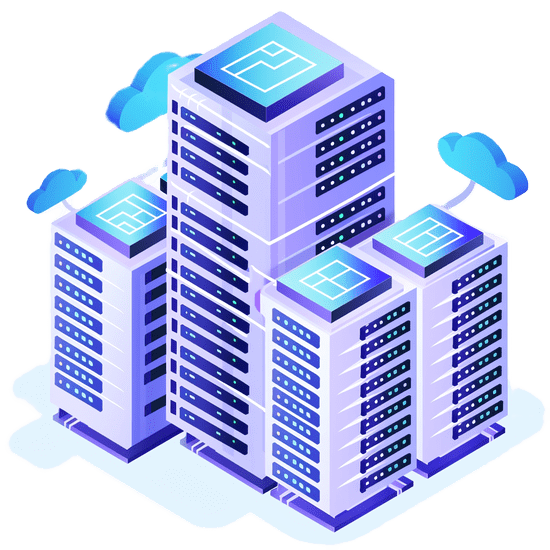
You can think of it as a large building that houses many small apartments. Each apartment is self-contained and has its own furniture, utilities, and privacy, even though they all share the same building structure. In this analogy:
Building (Physical Server): Represents a powerful computer or server located in a data center.
Apartments (VPS): Each apartment is like a VPS, which is a self-contained virtual server within the physical server. It has its own operating system (like Windows or Linux), allocated resources (CPU, RAM, storage), and software applications.
In simple terms, is like another computer.
Why You Want a VPS for Your Trading
We all have our personal computer where we can deploy our expert advisors, and that’s great!
But what will happen when your internet connection fails, or the supply fails? Your bots will stop trading, and that can have a catastrophic impact on your trading.
Using a VPS server for your trading offers many advantages.
Let’s have a look at them.
Reliability and Uptime
A VPS provides consistent and reliable performance because it allocates dedicated CPU, RAM, and storage resources to your trading activities.
This ensures that your trading algorithms run smoothly without interruptions caused by other users sharing the same server resources.
Low Latency Execution
Since VPS servers are typically housed in data centers close to financial markets, they offer low latency connections to trading platforms and exchanges.
This low latency is critical for strategies that target short timeframes with fast-moving markets, such as scalping, high-frequency trading or low-cap stocks.
24/7 Trading
Unlike trading from a personal computer that may be subject to power outages, internet disruptions, or hardware failures, a VPS operates continuously.
This ensures that your trading bots can monitor the markets and execute trades round-the-clock, even when you’re not actively monitoring them.
Security
Each VPS operates independently, with its own isolated OS environment. This isolation minimizes security risks, as your trading activities are not affected by other users on the same physical server.
Additionally, reputable VPS providers implement robust security measures, such as firewalls and regular security updates, to protect your data and transactions.
Scalability
VPS servers allows you to scale resources up or down based on your trading needs. As your trading strategies evolve or your volume of trades increases, you can easily upgrade your VPS resources (CPU, RAM) without experiencing significant downtime.
This scalability ensures that your VPS can grow alongside your trading operations.
Remote Accessibility
You can access your VPS from anywhere with an internet connection, using remote desktop protocols or secure shell (SSH) access.
This flexibility enables you to manage and monitor your trading bots, check performance metrics, and adjust strategies on-the-go, whether you're at home, in the office, or traveling.
Free Personal Computer
Constantly running resource-intensive applications on a personal computer can contribute to wear and tear over time. Furthermore, they often generate significant noise, especially when running resource-intensive applications like trading software.
By offloading these tasks to a VPS, you will extend the lifespan of your personal computer and enhance your workspace environment.
A VPS Server Is An Indispensible Tool For Algorithmic Trading
As you can see, a VPS is an indispensable tool if you are seeking reliability, low latency, security, and scalability for your automated trading strategies.
Believe me, opting for a VPS is a decision you won’t regret. Just as selecting the right broker can significantly impact your trading success, choosing a reliable VPS is equally crucial.
Imagine deploying your trading bots on a VPS, only for it to crash or disconnect unexpectedly. Your automated trading operations would come to a halt.
Throughout my career as a trader, I've tried out several VPS providers—up to five, to be precise. While this number may seem modest, transitioning from one VPS to another can be quite cumbersome, especially when migrating multiple bots and accounts. Therefore, it’s highly advantageous to make the right choice of VPS from the outset.
Moreover, many VPS providers overcharge for features that could be obtained at a lower cost from another provider, often with superior service.
And that's where I can help you.
I’m going to tell you everything you need to know to choose the best VPS server for your trading.
How to Choose the Best VPS Server for Your Trading
When choosing the right VPS for our trading, we need to look at the following points:
Resources
All resources are important, but you must look specially for CPU units and RAM memory. Very simple, the more, the better. The minimum required will depend on your trading, more on this later.
Uptime
VPS downtime may impact negatively your trading by making your robots miss signals. In addition, if the VPS is not set up as we teach in our course, you would need to set it up again. Don’t take any less than 99.99% uptime.
Price
This really depends on your requirements and budget. However, be careful here, you would be surprised to see VPS providers charging much more than others for the same power.
Low Latency
The lower the latency, the faster your orders will get to the market. In the past I used to use VPS with datacenters located in the same city that my broker's liquidity providers, but later I realized that I didn't need that. Unless your style is scalping or HFT, latency below 100ms should be more than enough for you.
Customer Service
There is no excuse for a VPS provider to not offer support 24/7. If you have any problem with your VPS, you will need immediate response or your trading may be affected!
Security
How secure are your service provider infrastructures? How do they grant the confidentiality, integrity and availability of your information? Having the right policies and security measures in place is key for your operations. Ideally, your VPS provider will be certified under ISO 27001.
Now that you know everything a VPS can do for your trading, and the features you should be looking at,
It's time to speak about to the resources you'll need
What Resources my VPS Needs for Trading
Let's start by the most important one, the RAM memory.
This is a question everyone has when looking for a VPS the first time: how much RAM I need. The answer is, it depends.
There are several factors that will influence the amount of RAM your trading requires, namely:
-
- The normal operation of the operating system
- The number of MetaTrader 5 or MetaTrader 4 platforms you open (each trading account requires a separate instance of MT5)
- The number of expert advisors deployed and their use of resources
- The number of symbols each expert advisor trades
Let's look at these points in a bit more detail.
How Much RAM a VPS Needs for Normal System Operation
Old versions of Windows like 2012 could support the system with just 500 MB of RAM, but these versions are no longer commercially available.
Most VPSs come with Windows versions from 2016 to 2022, and these need around 1 GB of RAM for normal operation.
Additionally, it’s important to note that this consumption can increase when the system searches for and installs updates. In those cases, the consumption could increase up to 1.5 GB.
With this in mind, we now know that our VPS will need a minimum of 1.5 GB of RAM just to maintain the minimum functionality of the system.
Now let's see how much our MetaTrader platforms can consume.
How Much RAM my VPS Needs for MetaTrader 5
Maintaining an MT5 platform can require around 200 MB of RAM. The consumption can vary depending on the tools you have deployed, the number of charts you have open, and the graphical objects or indicators deployed.
To minimize the RAM consumption of MT5, make sure to close all tools you do not need, only open the charts your bots will trade on, and ensure you have not deployed any technical indicators.
Opting for a minimal configuration will make your MT5 perform fewer calculations and server requests, thus avoiding unnecessary resource consumption.
If one MT5 platform requires about 200 MB of RAM, if you wish to operate multiple trading accounts, you will need to open multiple MT5 instances: as many as the number of accounts you wish to operate.
And in MT5, although we can connect multiple accounts to the platform, it is not possible to operate multiple accounts simultaneously in a single MT5. To do so, we must open several instances of the platform.
Therefore, to determine how much RAM you need for your MT5s, multiply those 200 MB by the number of MT5s you will require, and you will have a good estimate.
How Much RAM my VPS Needs for MetaTrader 4
In the case that you still use MetaTrader 4, the consumption does not vary much from MetaTrader 5, although there are some differences.
MetaTrader 4 is less resource-efficient and is not designed for multi-symbol trading. In fact, it stopped receiving updates several years ago.
Nevertheless, what we’ve seen for MetaTrader 5 can be extrapolated to MetaTrader 4.
As always, it is advisable to start with the minimum specifications and then resize the server if necessary.
How Much RAM my VPS Needs for the Expert Advisors
We already know how much the platform will consume, so let's see how much our MetaTrader 5 trading robots need, and here is where the biggest differences come in.
Each trading robot can vary greatly in consumption. However, this does not mean it cannot be estimated.
Based on my experience, here’s what you will need.
RAM Consumption of Simple Expert Advisors
If your robot trades a single symbol and makes simple server requests, such as retrieving recent price data or calculating one to ten indicators, then its consumption will generally be around 10 MB per robot.
RAM Consumption of Multi-Symbol Expert Advisors
A multi-symbol robot is a program that trades multiple symbols simultaneously. To obtain its RAM consumption, a simple calculation of 10 MB per symbol can be used, though it could be lower.
If the multi-symbol expert advisor is well-optimized, its consumption could be around 5 MB per symbol.
This is possible through a framework with object-oriented programming.
RAM Consumption of Portfolio Expert Advisors
A portfolio robot is a program that trades multiple strategies, with a strategy being a set of rules applied to one or multiple symbols.
In other words, we are dealing with expert advisors that trade multiple multi-symbol experts.
Therefore, regarding RAM consumption, in the case of portfolio robots, we are still dealing with multi-symbol robots. The important thing is the number of symbols that will be traded.
How Much RAM Do I Need for My Trading VPS?
Given all the information, you can now determine firsthand how much you need for your trading. Here are some examples:
- Beginner Trader: Trades a single account and will deploy 1 to 20 expert advisors, one per symbol. This trader would do well with a VPS with 1 CPU and 2 GB of RAM.
- Advanced Trader: Trades one to four accounts and will deploy expert advisors to trade up to 300 symbols in total. This trader would do well with a VPS with 1 or 2 CPUs and, most importantly, 4 GB of RAM.
- Extensive Operations: If your trading involves more than four accounts and collectively, your expert advisors trade more than 300 symbols, you might want to explore higher plans.
These requirements are estimative and could vary case by case. Factors such as expert advisor code optimization, the use of indicators, the optimization of these indicators, etc., also come into play.
Additionally, the timeframes of the traded symbols can influence resource consumption. Trading on M1 will consume more resources than trading on D1, which only runs the expert once a day.
This is an excellent starting point for you to get a general idea of your RAM requirements. I recommend you base your initial choice on these guidelines and then resize your server as your needs change.
For that reason, it is important that your VPS provider allows you to resize the server quickly, easily, and at no extra cost.
Start with the minimum and scale as you go.
Other Resources that a VPS Needs For Trading
There are other resources to keep in mind, although they are not as crucial. Let's see them:
- Operating System: This is a personal preference. If you trade with MetaTrader 5, you can deploy it on Windows, Linux, or macOS. Personally, I've always used Windows, so that's the system I use and teach.
- CPUs: Processing units are only relevant for their contribution to RAM. If you determine that you need 2 GB of RAM for your VPS based on the above, then 1 CPU with 2 GB of RAM will suffice.
- SSD Storage: Usually, about 40GB of storage is sufficient. However, keep in mind that MetaTrader downloads data from the assets it trades. Unless you are interested in storing this data, it is important to limit the number of bars in MetaTrader to avoid storing years of data, which would significantly increase memory consumption.
Cloud Servers: Much More than a Traditional Forex VPS
Cloud servers are not new, but recently they are consolidating as the best option for hosting our trading robots. Let's see why:
VPS Servers
Scalability and Flexibility
Traditional VPSs have more fixed resources. While some VPS providers do offer scalability options, the process is generally less seamless and slower compared to the dynamic adjustments available with cloud servers. This can limit your ability to respond swiftly to changes in your needs.
High Availability and Redundancy
VPSs are usually hosted on a single physical server. If that server fails, your service will be interrupted until the issue is resolved. This lack of redundancy can lead to downtime, impacting the continuous operation of your trading bots.
Performance and Resources
While VPSs offer dedicated resources, these can be limited and not as optimized as a cloud environment, especially under intensive workloads. On the other hand, in terms of latency, VPSs can have an advantage over cloud servers when located close to financial intermediaries.
Security
While VPSs can be secure, security depends largely on the provider and the security measures you implement yourself. The security infrastructure may not be as robust as that of cloud servers.
Cost and Efficiency
VPS prices are competitive, but there are now cloud servers with better prices and a higher price-quality ratio. Also, VPS costs can increase if you need to scale or add additional resources, and they can have more downtime, which can be costly in terms of missed trading opportunities.
Support and Maintenance
The level of support can vary by provider. Some VPSs require you to manage more aspects of the server yourself, which can be a disadvantage if you lack technical expertise.
Cloud Servers
Scalability and Flexibility
Cloud servers offer great flexibility and scalability. You can increase or decrease resources (CPU, RAM, storage) according to your trading needs without downtime. This is crucial to quickly adapt to market conditions and the needs of your algorithms.
High Availability and Redundancy
Cloud servers are designed for high availability. They are distributed across multiple data centers, which means if one physical server fails, another can take over without interruption. This redundancy is vital to ensure your trading bots operate 24/7 without interruptions.
Performance and Resources
They offer dedicated and guaranteed resources, and their infrastructure is optimized to handle large workloads. Cloud servers typically have lower latency and higher processing speed, only matched by strategically-located VPSs.
Security
Cloud providers invest significantly in security, offering advanced features such as integrated firewalls, DDoS detection and mitigation, and constant security monitoring. Additionally, most cloud providers comply with international security certifications.
Cost and Efficiency
A few years ago, they were more expensive than a traditional Forex VPS, but this has changed. Nowadays, you can find cloud providers offering a better price-quality ratio due not only to lower prices but also to greater scalability, flexibility, and less downtime. Additionally, you only pay for what you use, which can be more efficient in the long run.
Support and Maintenance
Cloud providers usually offer 24/7 technical support and manage the underlying infrastructure, freeing you from many maintenance tasks and allowing you to focus on your trading strategies.
In summary, a cloud server offers greater scalability, high availability, better performance, greater security, and a more efficient cost model in the long term compared to a traditional Forex VPS.
These features are essential for algorithmic trading, which requires fast and continuous execution, adaptability to market changes, and maximum security to protect your investments and trading strategies.
The Best VPS Server For Trading
If you're looking for the best VPS server for your trading, my recommendation is Zomro.
After trying several providers, it's the one I've found with the best price-quality ratio, and the one I currently use myself.